
Custom Web Development in Karachi
As an independent web development company in Karachi, I engineer high-performance business websites, e-commerce stores, custom portals, and web applications in Laravel, PHP, and modern frontend stacks. Every platform is built for fast loading speeds, search visibility, and reliable daily operation.
Web Development Case Studies
Production web applications, e-commerce platforms, and portals built for businesses in Pakistan, the UK, and international markets.


What I Build: Web Development Services for Growing Companies
Different business objectives require different technical architectures. As a website development company in Karachi, I help you select the exact stack that fits your operational needs, budget, and long-term scalability.
Business & Corporate Websites
Fast, lightweight corporate websites built on custom PHP or WordPress that articulate your value proposition, convert visitors into qualified leads, and rank organically in competitive search results.
E-Commerce Website Development
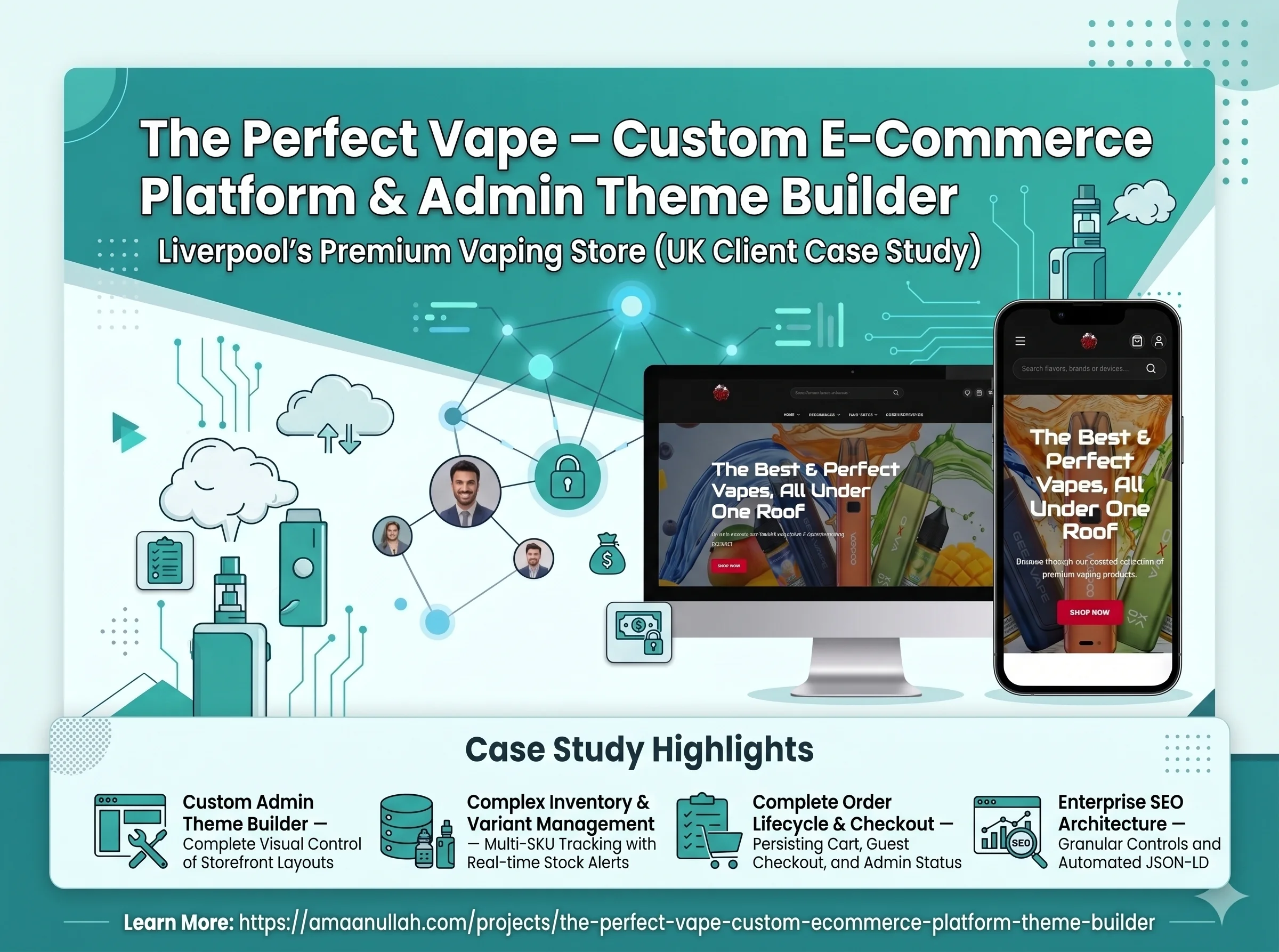
From tailored Shopify store builds to bespoke PHP e-commerce architectures with custom cart rules, inventory sync, and multi-currency checkouts without third-party app tax.
Web Portals & Marketplaces
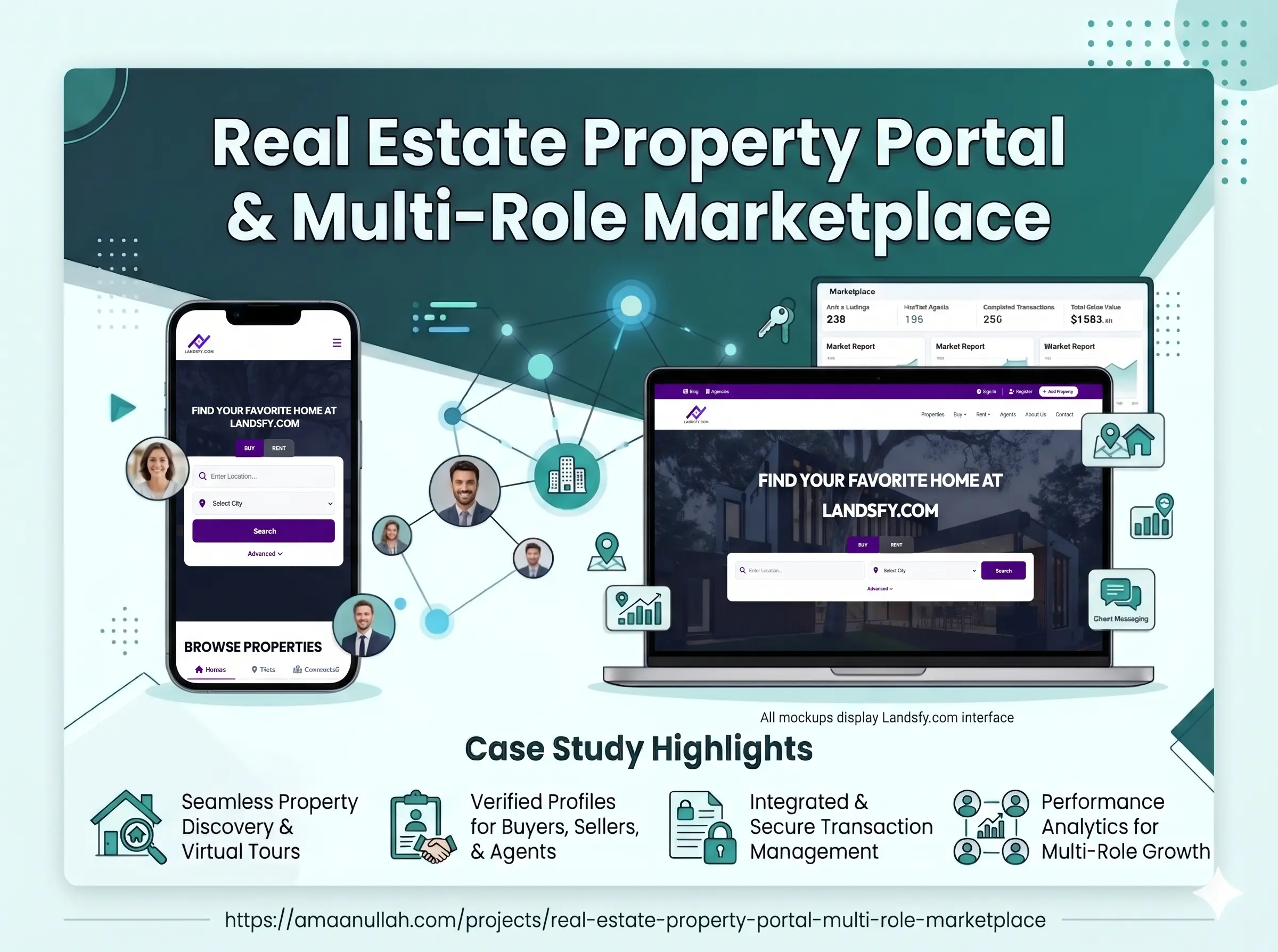
Multi-role property marketplaces, vendor directories, and customer portals where agents, buyers, and admins access role-segmented data, search filters, and transaction pipelines.
Custom Web Application Development
Internal operations dashboards, quotation calculators, and customer-facing web apps that replace spreadsheet chaos with structured relational databases and automated workflows.
Technology Stack & Architectural Standards
Every web application is engineered on proven, production-grade technologies chosen for longevity, security, and developer maintainability.
Laravel & Modern PHP
Clean MVC structure, Eloquent ORM, queue workers, and RESTful API endpoints.
MySQL & PostgreSQL
Relational indexing, ACID compliance, data integrity constraints, and query optimization.
React & Modern Vanilla JS
Interactive UI states, zero-framework lightweight bundles, and fluid responsive styling.
Shopify & WordPress
Custom theme development, API-driven store logic, and hardened CMS architectures.
How a Project Runs, Start to Finish
Direct developer collaboration with transparent milestones at every phase.
Discovery & Requirements Architecture
We audit your current operational bottlenecks, user roles, and data workflows to define an unambiguous technical specification before writing code.
Platform & Stack Decision
We select custom Laravel/React, Shopify, or WordPress based strictly on your functional needs and operational economics, with transparent rationale.
Iterative Staging Build
Development proceeds on a private staging URL with regular bi-weekly reviews. You test working modules in real-time rather than waiting for a single delivery.
QA, Security Hardening & Speed Optimization
Cross-device responsiveness, Core Web Vitals profiling, automated database migrations, and SSL/security headers are verified on real production hardware.
Launch, Handover & Documentation
Live domain cutover with zero downtime, complete source code handover, and structured administrator documentation so your team retains 100% ownership.
Working with Clients in UAE, Saudi Arabia, the UK, and the US
Over 50% of my production software systems have been built for overseas companies. Here is how international communication, time zone coverage, and contracts are handled cleanly.
Time Zone Coverage
Based in Karachi (PKT, UTC+5). Clients in Dubai/Abu Dhabi (GST, UTC+4) and Riyadh/Jeddah (AST, UTC+3) enjoy seamless same-day collaboration with only 1–2 hours difference. UK clients (GMT/BST) get 4–5 hours of common working hours, and US clients get focused morning check-ins and overnight sprint delivery.
Direct Communication
You communicate directly with the engineer writing your code via Slack, WhatsApp, Google Meet, or your preferred project tracker. No account management layers, sales games, or lost context.
Contracts & Payments
Projects run on clearly documented milestone deliverables and standard intellectual property handover agreements. International payments are accepted via Wise, Payoneer, direct bank transfer, and other major platforms — ensuring frictionless collaboration regardless of where your business is based.
Frequently Asked Questions
Honest answers about web development scope, technologies, and timelines.
Do you build custom web applications or use CMS platforms like WordPress and Shopify?
Can you fix or modernize an existing website instead of rebuilding from scratch?
How do you handle technical SEO and Core Web Vitals during web development?
Is Shopify or custom PHP better for an e-commerce platform?
How does remote collaboration work for clients in the UAE, Saudi Arabia, the UK, or the US?
How long does a typical web development project take to launch?
Ready to Build Your Website or Web Application?
Tell me about your business goals, target audience, and functional requirements. I will provide an objective technical assessment and transparent timeline within 24 hours.
